
Introduction
Cold rooms play a vital role in the cold supply chain. Whether they are used for storing food, pharmaceuticals, fruits, or as warehouses for raw materials in industries, they are an indispensable part of infrastructure in many sectors. Understanding the components of a cold room is essential for achieving optimal performance. Familiarity with these components and sourcing them from reputable suppliers significantly reduces both the initial and maintenance costs.
In this article by Arkacool, we thoroughly examine the key components of an industrial cold room.
What Are the Main Components of a Cold Room?
In any industrial cold room, a set of components works in harmony to maintain the desired temperature for stored goods. A clear understanding of these components is crucial for precise design, optimal equipment selection, and stable operation. Knowing the role of each component also helps reduce energy consumption, extend system lifespan, and prevent costly failures.
Below is an overview of the main components of a cold room, followed by a detailed description of each one:
Compressor
The heart of the refrigeration system, responsible for compressing the refrigerant.
Condenser
A heat exchanger that removes heat from the refrigerant and releases it to the environment.
Expansion Valve
Controls the flow and pressure of the refrigerant before it enters the evaporator.
Evaporator
Absorbs heat from the cold room interior.
Internal Fans
Distribute temperature evenly inside the chamber.
Electrical Panel and Control Systems
The brain of the refrigeration system.
Insulated Panels and Cold Room Body
Provide a sealed structure to maintain the temperature.
Doors and Entry Systems
Physical elements controlling access.
Doors and Entry Systems
Protect equipment and personnel.
Cold Room Components: The Refrigeration Team Members
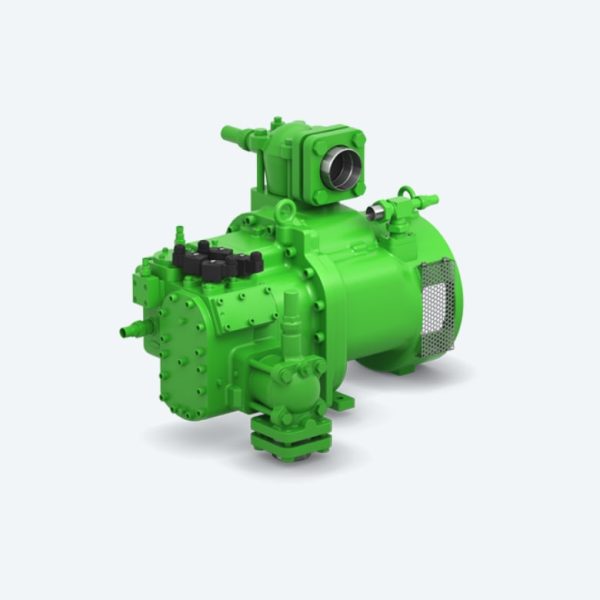
Compressor
The compressor, as the heart of the system, compresses and circulates the refrigerant. Choosing the right type of compressor based on capacity, refrigerant type, and operating conditions is a key design decision. Common types include piston, screw, scroll, and centrifugal compressors, each with its own advantages and limitations.
Condenser
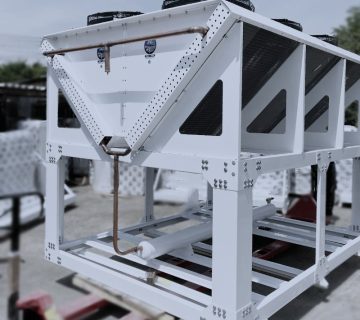
The condenser removes heat from the refrigerant, converting it from a gas to a liquid. It can be air-cooled, water-cooled, or evaporative. The choice depends on local climate conditions, installation space, and heat load.
Expansion Valve
The expansion valve reduces the pressure of the liquid refrigerant and prepares it for entry into the evaporator. It plays a crucial role in precise cooling performance. Common types are thermostatic valves, electronic valves, and capillary tubes.
Evaporator
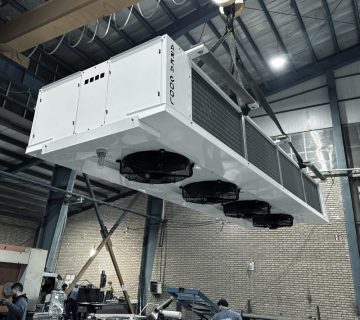
The evaporator absorbs heat from the cold room interior. Its design must match the type of stored goods and required temperature conditions. Tube, plate, and finned evaporators are commonly used, each suited to specific applications.
Air Circulation Fans
Internal fans evenly distribute the cold air. Choosing the right fan in terms of airflow rate, noise level, and power consumption is essential for maintaining uniform temperature and improving energy efficiency.
Insulation Materials and Tools: Ensuring Energy Efficiency
Sandwich Panels
These consist of a thermal insulation core and metal sheets. Common materials include polyurethane (PUR) and polyisocyanurate (PIR). The thickness, density, and quality of the insulation directly affect energy consumption and stable internal temperature.
Floor Insulation and Underfloor Heating
In sub-zero cold rooms, underfloor heating is necessary to prevent ground freezing and structural damage. Proper thermal insulation layers combined with underfloor heating help maintain performance and prevent frost heave or cracks.
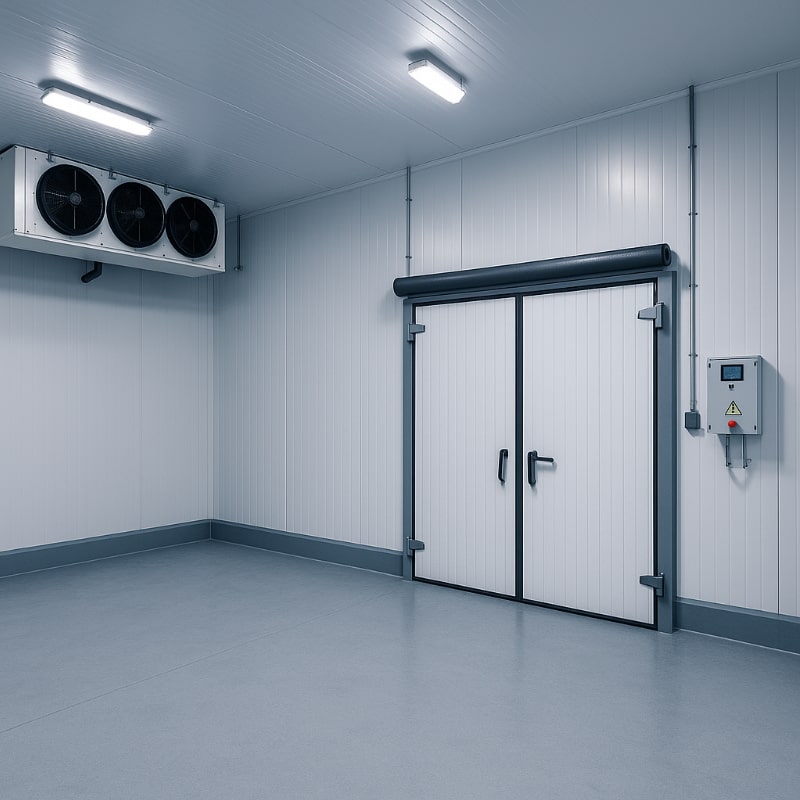
Doors and Air Curtains
Doors are critical weak points for temperature control and must be chosen based on application and traffic level. Sliding, hinged, and high-speed (roll-up) doors are common. Cold air curtains also help reduce heat ingress when doors are open.
Electrical Components: Power and Stability
Electrical Panel
The central electrical panel supplies power to compressors, fans, evaporators, and other components. Proper design with electrical protections and easy maintenance access is essential for safe and stable operation.
Digital Controllers and PLC
Temperature control, defrost cycles, compressor scheduling, and other functions are managed by digital controllers or PLCs. These systems use sensors and software for precise temperature regulation, alarms, and remote monitoring.
Cold Room Monitoring: Reducing Costs and Errors Through Automation
Monitoring and Alarm Systems
Professional projects include monitoring systems that send alerts in critical situations (via SMS or internet). These systems continuously track temperature, humidity, and equipment status.
Pressure Relief Valve and Balance Damper
To maintain structural safety, balance dampers and pressure relief valves are installed to prevent damage from internal pressure fluctuations.
Other Key Components: Subtle Yet Impactful
Moisture-Proof LED Lighting
Lighting must withstand moisture, low temperatures, and minimize energy use. Industrial waterproof and anti-freeze LED lights ensure uniform illumination and long service life.
Shelving and Internal Transport
Proper shelving made of rust-resistant materials and safe internal transport equipment like forklifts or carts are essential, especially in food storage facilities.
Door Safety Equipment
Emergency locks, alarms, and entrapment warning systems are mandatory for worker safety. These prevent potential hazards and improve work comfort.
Design Tips for Energy Efficiency in Cold Rooms
One of the main goals in cold room design is minimizing thermal loss and electricity use. Selecting insulation with low thermal conductivity and standard thickness, using environmentally friendly refrigerants with low GWP, and implementing heat recovery systems all contribute to energy optimization. Proper equipment layout, defrost planning, and smart controls significantly reduce operating costs.
Comparison Table of Key Cold Room Components
Component | Function | Common Technology/Material | Impact on Energy Use |
Compressor | Refrigerant compression | Piston, Screw, Scroll | High |
Condenser | Heat transfer to environment | Air, Water, Evaporative | Medium |
Expansion Valve | Reduce refrigerant pressure | Thermostatic, Electronic | Low |
Evaporator | Absorb heat from interior | Fin-tube, Plate | High |
Fans | Even air distribution | Axial, Centrifugal | Medium |
Sandwich Panels | Thermal insulation | PUR, PIR | High |
Doors | Prevent warm air ingress | Sliding, Hinged, Roll-up | Medium |
Electrical Panel | Control electrical systems | Contactor-based, PLC | Low |
Controllers | Equipment performance | Digital, PLC | Low |
Safety Equipment | Protect staff and structure | Emergency lock, Alarm | Low |
Conclusion
Designing and building an industrial cold room is impossible without a clear understanding of its key components and proper selection of each. From the compressor and evaporator to the electrical panel and insulation, every component plays a unique role in overall system performance. Applying technical expertise and proper implementation not only improves efficiency but also significantly reduces maintenance costs in the long term.
The Arkacool team provides professional engineering solutions and is your trusted partner in designing and building industrial cold rooms.


No comment