
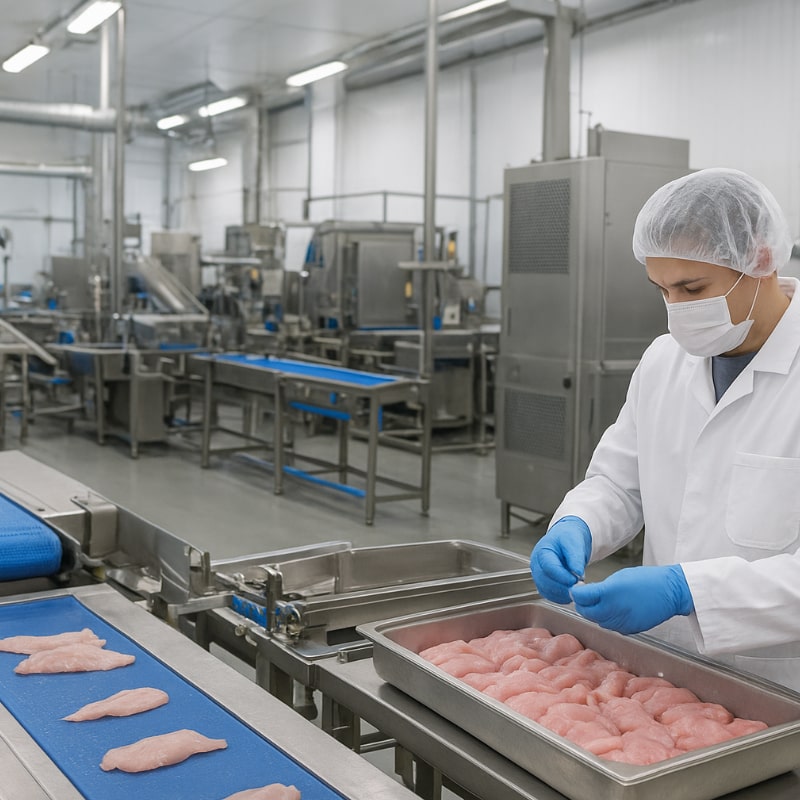
The design and establishment of food processing halls represent one of the most critical steps in creating a safe, efficient, and fully optimized production chain for edible products. These halls include a collection of specialized areas and equipment that cover every stage—from the reception of raw materials, through preparation, processing, and packaging, all the way to the release of the final product. Proper execution of the building infrastructure, ventilation, drainage, processing machinery, quality control stations, and support facilities has a direct impact on operational efficiency, food safety, and compliance with strict sanitary standards.
In this article, presented by Arkacool, we will explore the different components of food processing halls and examine essential design principles, equipment selection, and maintenance requirements for these industrial environments.
General Overview of Food Processing Halls
Food processing halls are controlled industrial environments specifically designed to carry out various operations such as preparation, processing, packaging, and sometimes even storage of food items. They form an inseparable part of the modern food production chain and are responsible for maintaining product quality while preventing any type of contamination—whether physical, chemical, or microbiological.
The design of such facilities must strictly follow the principles of industrial hygiene, international standards such as the Codex Alimentarius, mandatory food safety systems like HACCP, and national regulations, including the guidelines issued by the Ministry of Health or Food and Drug Organizations. Key requirements include controlling the flow of raw and processed materials, strict segregation of clean and contaminated zones, the use of washable and corrosion-resistant building materials, and reliable, durable equipment.
Inside these halls, a wide range of operations takes place: raw material washing, peeling, cutting, cooking, frying, vacuum packaging or modified atmosphere packaging (MAP), and preparation for cold storage or transportation. The placement of equipment, ventilation systems, drainage networks, and quality control procedures must be planned in such a way that not only production efficiency is maintained but also food safety and worker comfort are ensured.
In the following sections, we will break down the main components of these facilities step by step.
Key Considerations in Setting Up and Managing a Food Processing Hall
Layout and General Design
The layout must guarantee that raw materials, semi-finished goods, and final products travel along separate and non-overlapping paths. This principle is vital for preventing cross-contamination. Careful planning of spaces such as raw material reception, preparation zones, processing lines, packaging units, warehouses, and product dispatch areas plays an important role in optimizing both space and workflow. Adequate room for safe staff movement and equipment storage should also be included.
Structural and Sanitary Infrastructure
Floors and Walls
Floors and walls must be made of materials resistant to moisture, chemicals, and abrasion. Coatings such as epoxy or polyurethane are highly durable, easy to clean, and can be effectively disinfected, thus contributing significantly to hygiene.
Ventilation and Air Extraction Systems
Controlling temperature, humidity, and air quality through industrial ventilation systems is essential to prevent vapor accumulation and unpleasant odors. A combination of centralized and localized ventilation ensures even air distribution and creates healthier working conditions for employees.
Drainage and Wastewater Systems
The hall must feature properly sloped floors and safe, efficient drainage systems. Stainless steel drains and collection channels prevent the buildup of organic waste and facilitate easier cleaning and sanitation.
Processing Equipment and Machinery
Raw Material Preparation Equipment
Washing machines, peelers, cutters, and shredders are used during the initial processing stages. These machines should be made from stainless steel, washable, and suitable for operation in humid environments.
Thermal Processing Machines
In many production lines, heat is essential for cooking, frying, pasteurization, or sterilization. These units must be designed with attention to safety, thermal efficiency, and energy consumption, complying with the latest industry standards.
Packaging Machines
Processed food must be packaged in a sanitary environment using vacuum machines, MAP systems, or aseptic packaging technologies. The packaging method depends on the type of product, its shelf life, and the logistics chain.
Internal Transport Systems
Conveyors, trolleys, and specialized forklifts are used to move materials throughout the hall. These systems must integrate seamlessly with the production line to ensure a smooth and continuous workflow.
Quality Control and Food Safety Systems
Quality Control Stations
Specific areas within the hall are dedicated to sampling and laboratory testing. These stations should be equipped with basic laboratory instruments to analyze microbiological and chemical properties of food.
HACCP and Product Traceability Systems
Implementing food safety management systems such as HACCP is mandatory. This involves identifying critical control points, designing corrective measures, and ensuring full traceability of products at every stage of production.
Supporting and Welfare Facilities
Changing Rooms and Showers
Employee entry and exit must be through dedicated changing rooms equipped with showers. These areas are essential for maintaining biosafety and meeting hygiene inspection requirements.
Rest and Dining Areas
Providing dedicated rest areas and cafeterias for workers during breaks increases job satisfaction and overall productivity.
Administrative Offices and Central Control
Close supervision of operations is carried out through control rooms and offices equipped with monitoring systems and specialized software. These spaces provide managers with immediate access to production data, equipment status, and quality control information.
Comparative Table of Core Components in Food Processing Halls
Component | Main Function | Technical Features | Impact on Efficiency |
Flooring | Resistance to moisture & chemicals | Epoxy or polyurethane coatings | High |
Ventilation | Controls temperature & air quality | Central + localized industrial ventilation | Medium |
Processing Units | Mechanical or thermal food processing | Stainless steel, washable, corrosion-proof | High |
Packaging | Preserves quality & prevents hazards | Vacuum, MAP, aseptic systems | High |
Quality Control | Ensures safety and compliance | Sampling stations and lab equipment | High |
The Role of Technology in Managing Food Processing Halls
Technological advancements in recent decades have transformed food processing environments. The introduction of automated and semi-automated systems for preparation, processing, and packaging has not only accelerated production but also improved hygiene reliability and product consistency. Automation in temperature control, cooking time, humidity adjustment, or gas injection for packaging has minimized human intervention and reduced the likelihood of errors.
Furthermore, modern technologies such as the Internet of Things (IoT), smart sensors, and real-time monitoring systems have enabled continuous tracking of key environmental indicators including temperature, humidity, pressure, and potential contaminants. These tools allow managers to receive instant alerts and take corrective actions before disruptions or losses occur. As a result, technology plays a fundamental role not only in facilitating operations but also in guaranteeing product quality and compliance with health regulations.
Food Processing Halls at a Glance
Food processing halls are among the cornerstones of producing safe, high-quality food. Adherence to engineering design principles, environmental hygiene, modern equipment usage, and robust quality assurance systems form the foundation of success in such facilities.
If you are seeking to design or redesign industrial food processing halls in line with international standards, the Arkacool technical team, with proven expertise and extensive knowledge, is ready to provide specialized services in this field.

No comment