
Selecting the right condenser is a key step in the setup and efficient operation of refrigeration systems. A proper choice has a direct impact on system performance, energy consumption, and maintenance costs. In this article by Arkacool, we’ll explore critical factors for choosing and purchasing a condenser and provide practical guidelines to help you make an informed decision tailored to your cold storage needs. Understanding the technical features, types, and capacities of these units will enable you to make the best possible choice and ensure optimal system performance.
What is a Condenser and What Role Does It Play in Cold Storage?
A condenser is one of the core components of a refrigeration system, responsible for converting the refrigerant from gas to liquid. During the refrigeration cycle, the refrigerant’s temperature and pressure are increased by the compressor, and then it enters the condenser. Here, the condenser transfers the refrigerant’s heat to the environment, cooling it down and converting it back into liquid. This process is essential for continuing the refrigeration cycle and ensuring sufficient cooling.
Condensers are categorized into different types based on their function and structure, which we will discuss in the next section.
Types of Condensers (Air-Cooled, Water-Cooled, and Evaporative)
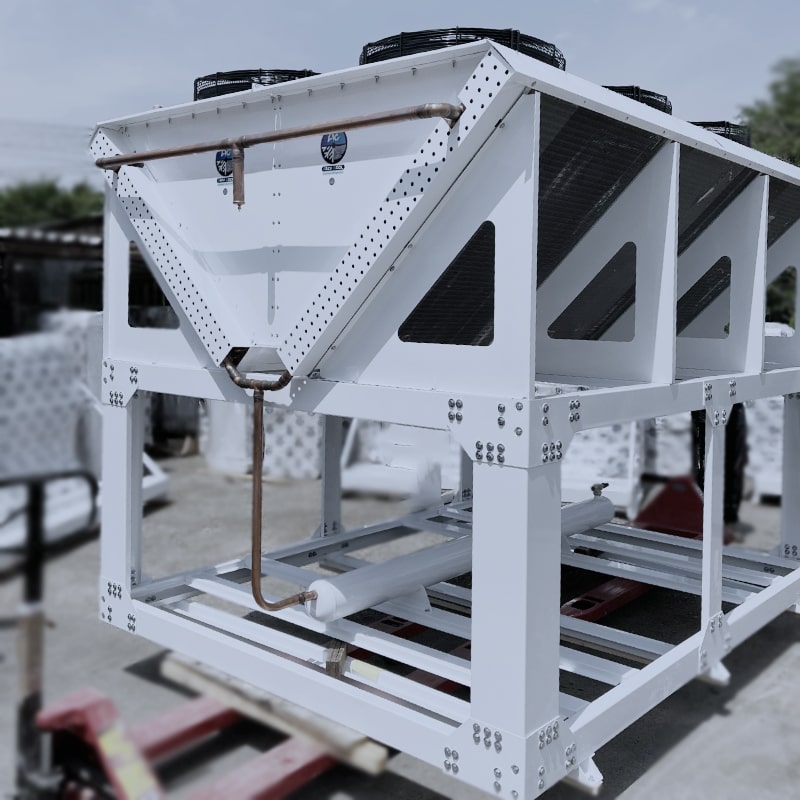
1. Air-Cooled Condensers
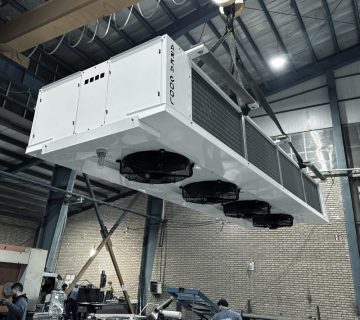
These use air as the cooling medium. The hot refrigerant flows through the condenser tubes, and the passing air absorbs its heat. There are two types of air-cooled condensers:
Forced Convection
Fans or blowers are used to increase airflow and enhance heat transfer. These are common in systems with higher capacity such as air conditioners.
Natural Convection
Air flows naturally over the hot coils without fans. This method is used in small systems such as household refrigerators.
2. Water-Cooled Condensers
These use water as the cooling fluid. The refrigerant flows through the tubes while water passes over them, absorbing the heat. Water-cooled condensers are typically used in high-capacity systems where water is readily available.
3. Evaporative Condensers
A hybrid of air- and water-cooled condensers, these units spray water onto the condenser coils while air flows over them. As water evaporates, it absorbs heat from the refrigerant. These condensers are widely used in large industrial systems due to their high efficiency and lower water consumption.
Differences and Applications of Each Type
The choice of condenser depends on environmental conditions, available resources, and system requirements:
Air-Cooled
Ideal for dry regions or areas with limited water resources. They require more installation space and are generally used in medium-capacity systems.
Water-Cooled
Offer better heat transfer efficiency and are used in high-capacity systems where water is accessible and affordable. They usually require additional equipment such as cooling towers.
Evaporative
Combine the advantages of both air and water-cooled systems and are preferred for large industrial setups requiring high efficiency with moderate water usage.
Ultimately, the choice should balance environmental conditions, resource availability, system capacity, and operational cost.
How to Choose the Best Condenser for Cold Storage
Choosing a proper condenser significantly affects the efficiency and lifespan of your refrigeration system. There’s no such thing as a universally “best” condenser—it depends entirely on your specific needs and system conditions.
Below is a comparison of different types of condensers:
Feature | Air-Cooled Condenser | Water-Cooled Condenser | Evaporative Condenser |
Initial Cost | Medium | High | High |
Energy Consumption | Higher | Lower | Lowest |
Maintenance Cost | Low | Medium | High |
Installation Space | Large | Small | Medium |
Suitable for Regions | Hot and Dry | With Adequate Water Supply | Hot and Humid |
To get expert and free advice on selecting the best condenser for your cold storage, you can consult with our specialists at Arkacool.
Additional Key Factors to Consider
1. Condenser Capacity
The condenser’s capacity must match the cooling load of the cold room. Key elements to consider when calculating capacity include:
- Size of the cold room and type of stored goods
- Required storage temperature
- Local climate conditions
2. Energy Consumption
Energy usage plays a critical role in operational costs. Selecting a high-efficiency condenser helps reduce long-term energy bills. Look for:
- Coefficient of Performance (COP)
- Energy Efficiency Ratio (EER)
These values are typically listed on the product’s energy label.
3. Build Quality and Materials
The quality and materials used in construction directly impact durability and performance. Important aspects include:
- Corrosion- and rust-resistant materials
- Design features that prevent water accumulation and icing
Installation and Maintenance Tips
Proper installation and regular maintenance are essential for reliable operation and system longevity.
Installation Tips
Location
Choose a site with adequate ventilation, away from walls or obstructions, and protected from direct sunlight or rain.
Leveling
Ensure the unit is perfectly level to avoid energy inefficiency and performance issues.
Spacing
Maintain 30–60 cm clearance from other equipment or walls to ensure optimal airflow.
Brackets
Use sturdy mounting brackets to reduce vibrations and movement, lowering damage and maintenance costs.
Maintenance Tips
Regular Cleaning
Clean condensers periodically to prevent dust buildup, which can severely affect performance.
Leak Inspection
Routinely check for refrigerant leaks, which can harm system efficiency and the environment.
Temperature Monitoring
Monitor refrigerant temperature and pressure to optimize performance and detect potential issues early.
Pipe Inspection
Regularly examine condenser piping for damage or corrosion and perform timely repairs.
These steps ensure optimal performance, extended lifespan, and lower maintenance costs for your condenser.
Summary
Choosing the right condenser for your cold storage system is crucial and directly affects performance and system longevity. Given the variety of options and specific cold room requirements, it’s essential to assess key factors like capacity, refrigerant type, energy efficiency, and material quality. Furthermore, proper installation and maintenance can significantly enhance system reliability and reduce operational costs.
With expert consultation and careful consideration of the factors discussed, you can make an ideal choice that not only lowers energy bills but also ensures the quality of your stored products. Investing in the right condenser translates to better efficiency and long-term savings.


No comment